Adam Reger | Freelance Writer

Philadelphia-based freelance writer

Another Substack post!

As mentioned previously, I am now on Substack. It’s been fun to give myself the low-stakes challenge of producing one post a week. This week, I went to my own archives to resurrect a piece of writing I did as part of a job application for a role with a nonprofit consulting firm that then left me hanging for a solid month. But hey, I got a newsletter out of it!

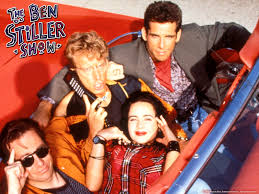
It’s an appreciation of The Ben Stiller Show, one of my favorite-ever TV shows and a huge influence on my worldview and sense of humor. Check it out here:

https://nothing2say.substack.com/p/making-the-case-the-ben-stiller-show

I am on Substack

I started a Substack newsletter, which I’m sure I will write and publish as infrequently as I have been adding anything to this site. For the first one I wrote about the book I have been reading each summer for the past 11+ years. I hope you will check it out and consider subscribing:

This is just to say

It has been almost a year since my family and I relocated from Pittsburgh, where all my daughters were born, to the suburbs outside Philadelphia, where I was born (and where my wife and I both grew up). It’s been a very good year, and although we miss Pittsburgh we are glad to have made the move.

I’m hoping to revive this blog to some extent, but as you might expect I’m a bit rusty. It feels like I don’t have quite the same font of quaint absurdity and twee observations running through my life as I did for a long time there, and part of shaking off the rust is simply finding something worthwhile to say. So there it is; I’ve made a start.

An excerpt from Dr. Teen

As mentioned in a previous entry, I recently self-published my novel, Dr. Teen. Read the first section below and visit the book’s Amazon entry to learn more.

Part I. June

At the supermarket, Errol has discovered a trick that would lose the store manager his shirt if everyone knew about it. It involves raisins. 

There are “name brand” raisins: your Sunmaid, your Newman’s Own, a few gourmet brands with less market saturation. Then there are the generics: Cub Foods brand, ValuTime. These come in boxes and cylinders, which should tell you something right off the bat. With the name raisins you’re paying for the marketing and such, but even with these cheapo raisins you are still paying for the packaging they come in.

Eliminate both categories right off the top. Those raisins are strictly for suckers.

It is mid-morning on a weekday. Just housewives and Errol Gropp here in the supermarket.

Forget the boxed raisins and head over to the dry-goods section, where you can scoop your own couscous, nuts, granola, etc. Raisins here are $7.99 a pound. It seems steep, but that is markedly cheaper than boxed raisins, which go for over $10 per pound if you bother to do the math. 

Seems like a good deal. But hold on.

Read the rest of this entry »

Two Self-Published Books of Fiction

It’s a little surreal to be writing this but I’ve gone ahead and self-published two books of my fiction through Amazon:

Half of Something is about 90 pages of “fun” fiction, some of my earlier published stories; and

Dr. Teen is a novel about an adolescent therapist restarting his life after a series of setbacks.

I posted Half of Something a few months ago and haven’t breathed a word of it to anyone. I’m very proud of it, but I’ve continued to send out my “serious” short story manuscript, which is all the things you’d find in the collections coming out from university press contests: sad and somber, thematically linked and rich, with interesting formal experimentation. (I think it’s more than that, of course—funny and weird—but so far only a few presses have agreed, slotting the collection onto their longlists or semifinal rounds.) The stories in Half of Something have (almost all) been published, but sadly a number of the online journals where these stories appeared have gone defunct; I was inspired to collect these stories when a friend asked for a recommendation of my favorite stories I’d written, and combing through the fiction page of my website I saw with horror how many links no longer went anywhere. Publishing this book is as much an act of archiving these pieces as it is an effort to make my name or any of the other goals we associate with publishing.

Dr. Teen is a different situation. I love this novel. My sweat and blood are in this book (I know, gross), but it’s not simply a matter of sunk costs. When I open this document, I still get swept up in the narrative, the scenes; I still think of images and incidents from this book.

I worked on Dr. Teen for years, and it would be true to say I wrote it twice. I wrote it first over the magical summer of 2015, when I’d been married a year and, after my first year as a college instructor, I had my first summer off in almost a decade. I made Dr. Teen by writing one episode each day of that summer, creating a lapidary portrait of the summer of my character, Errol Gropp, who’s trying to regroup and find a new direction in his life after a divorce and the loss of his counseling practice. Some days I’d write a thousand-word scene, and others I might feel pinched for time or uninspired, and write a scene of 100 words.

That summer I wrote Dr. Teen as more of a comedy—Errol was referred to consistently as “Dr. Teen,” as if mirroring how he saw himself, and the episodes were sillier. At some point years before this I’d written a short, incomplete story about a man sitting in an IHOP hectoring the DJs at a college radio station who’d declined to give him a summer program. The scene was based on both my own experience as a summer DJ at Beloit College’s WBCR and a hazy memory of working in the archives in the depths of Beloit’s library, organizing the WBCR files and coming across a prospectus for a call-in advice show aimed at teens. The man who’d proposed the show was a local and he’d been incredibly thorough in preparing this proposal for the consideration of the college students who always managed the station in the summer time: he included multiple suggested names for the show, I remember, as well as a list of equipment he would need. For years, the absurd boldness of these suggestions—I’ll just need a six-line phone system installed, thank you very much, and if you could hire an assistant producer to screen calls for me that would be terrific—stuck with me, and I knew the short story I’d written, really just a sketch, wasn’t sufficient to the rich sense of absurdity I had picked up on, and still remembered, from those materials in the archives.

Because the files contained a number of letters from the call-in DJ to the producers, taking them to task in increasingly strident terms for declining his show. Can you imagine, I asked myself, getting so worked up about something like a summer show on college radio? We didn’t use this word back then but the whole thing was so cringe. That first version of Dr. Teen steered into the cringe, into the overbearing and hilarious absurdity of a 48-year-old man making a federal case out of being passed over for one summer.

I took that version of Dr. Teen through the process of querying literary agents and then trying small presses and contests. I wondered what was wrong with this novel that no one had fallen in love with it the way I had, and so I went back to it. I got some wrongheaded advice from a well-meaning workshop I was in, and floundered around for a summer, but eventually found my way out of the wilderness. I rewrote Dr. Teen, this time in the same style that had meant so much to me—short episodes, each with its own punch and savor, in the style of the novels that had inspired me: Mrs. Bridge and Mr. Bridge by Evan S. Connell, and Abbott Awaits by Chris Bachelder. But this time I added pathos, a deep hurt lurking in Errol’s past that provides ballast for the considerable silliness and humor that are still present in the book. Why would a 48-year-old man be so upset about a silly radio show? What else is going on in his life that might explain it? This time, I found answers to those questions.

The perception of self-publishing has changed so much since I was in graduate school (which was, admittedly, a long time ago). Publishing itself has changed dramatically, not just since the end of grad school but since I first started querying agents re: that first version of Dr. Teen. I can’t deny that I feel some mixed emotions to be self-publishing this novel, but along with disappointment I also feel some disillusionment around the fantasy of publishing that I’ve had for a large part of my life. I’m over the idea that the book will have been a failure if it’s not published by a big house or a cool indie press.

When I was in elementary school and someone asked what I wanted to be when I grew up, I’d very often say, “An author.” It’s only with time that I’ve added all these additional qualifications, including not just the size and caliber of the press but the expectation that authorship would be my sole career. I don’t expect to make any money from either of these books but my hope is that I will publish future books and someone interested enough in my work will be able to find Dr. Teen and Half of Something and check out my back catalog.

Before this gets too maudlin I’ll just come to the point: I would be thrilled if anyone who may come across this blog post would check out either book. I’d love to hear what you think of them. That’s the point, in the end: to be read, to be out there in the world. Better to send Dr. Teen out there, whatever happens, than to let this beloved book sit unread in a folder on my hard drive (or, you know, up there in the ether, as the case may be).

From the Archives

I love looking at old stuff; in particular, paging through old magazines and poking around in boxes and folders with printed materials from another time.

As they say, the past is a different country. They do things differently there. The fashion is weird, everyone is skinnier, and they smoke in restaurants.

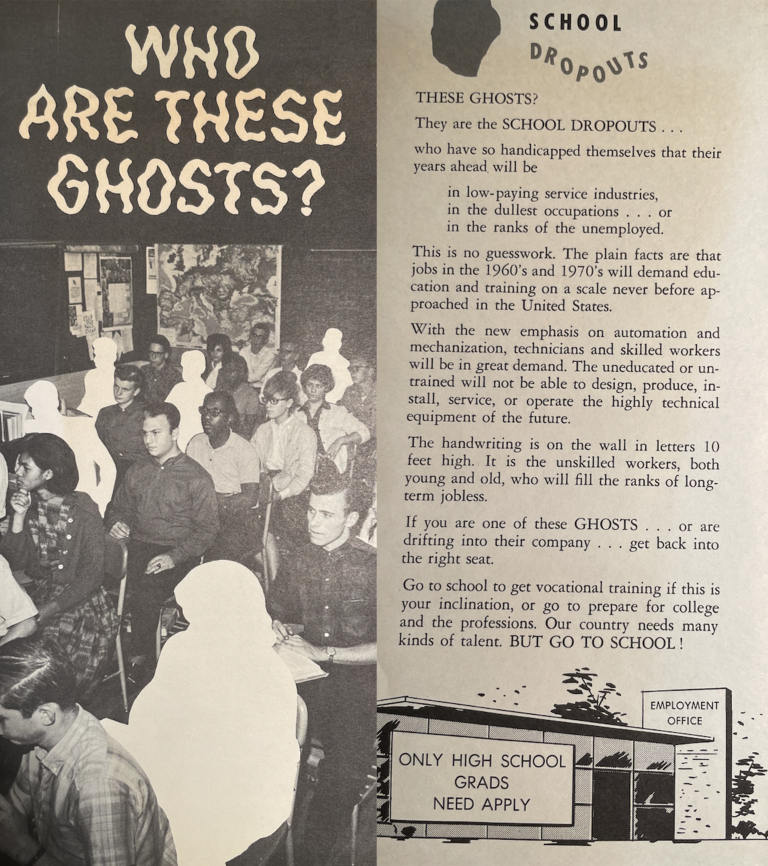
A recent find that delighted me:

This pamphlet was in some materials at the Heinz History Center’s archives, in its collection for Falk Lab School, where I work as communications coordinator. I was in heaven sifting through old letters and photographs, finding mimeographed newsletters and faded yearbooks.

The only thing was, it was hard to concentrate. I was there this past Wednesday, when some piece of human garbage was busy calling in hoax “swatting” calls to a bunch of schools across Pennsylvania. One of them was Central Catholic High School in Oakland, close enough to the University of Pittsburgh and to Falk that I started getting text messages about it: emergeny notifications from Falk, then from Pitt’s emergency network, then from my wife. Falk went into a modified lockdown, then Pitt did as well.

My daughter attends Falk and it was unsettling, to say the least, to be at the History Center, three or four miles away, and to not know anything about what was going on, much less to be able to do anything about it. I’d picked that day to go because I was getting kicked out of my office for a couple hours to accommodate some Middle School students taking tests, but it felt like I’d been asleep on the job.

I’m struggling to find a way to button this all up.

The present intrudes upon the past.

Try as we might, we cannot escape the present by digging through the dusty archives of a bygone past.

I’m half-joking with these fusty takes, but maybe there’s something there, something about how it’s a fiction to see some compressed, simple reality in the past, as if people in those times didn’t have troubles. Their collars were wider and they didn’t curse as much or as casually we do, but just look at that pamphlet. People dropping out of high school and straight-up turning into ghosts! I’d call that a real problem.

Housekeeping

Popping in to this blog just to say I’ve updated the fiction section of my website. Recently I met someone who was interested in reading some of my work and before sending him the link to this website, I looked over that section, trying to think of what to recommend first, and discovered that a horrifying number of the publications that have posted and/or printed my work over the years are no longer operating. I’m sad for the editors of those publications, many of which I quite enjoyed.

For any writers reading this, let this be a reminder to keep copies of your work. I’m old enough to remember debating whether online journals were “worth” as much as print journals; i.e., if it was as impressive to list a publication in an online lit mag on your C.V. It’s one of those debates that’s been rendered pretty much moot by the march of technology—while we were debating this over beers after workshop, online publishing just became the norm. Sometimes when things become the new normal, you’re a little less circumspect about possible downsides (kind of the way you just agree to those lengthy terms & agreements forms, because what are you going to do, not access this app/website/whatever?).

Anyway, I’ve cleaned up that section, which now contains significantly fewer links.

: (

Starved for weirdness

Today was the first day since the beginning of the pandemic that I went to a coffee shop and sat and wrote. It was an outside courtyard and I was seated at a metal table beside a little garden, but still.

While I was sitting there, something skittered across my vision. I tuned it out but a moment later this guy who was at the far end of the courtyard got up and approached the garden. When I looked up he said, “I think that was a spotted lanternfly.”

If you’re unfamiliar, spotted lanternflies are these invasive insects that destroy plants. I’m not super familiar with them myself because they have not previously made it to Pittsburgh, at least not that I have seen. Most of what I know I’ve heard from family in Philadelphia, where they are a much bigger nuisance. There and now here, if you see one of these bugs you are encouraged to kill them. (Seems kind of rough to me but that’s apparently the way it is.)

Anyway this stranger and I stomped around the garden for a minute or two, trying to flush this thing out so we could stomp it to death. It was a little funny and made me feel like a little boy, charging into the undergrowth, eager to wreak havoc. After the lanternfly disappeared, we each returned to our tables and I took the opportunity to ask the guy if he happened to know the wi-fi password.

Throughout the day today I had this sense of re-entering the world somehow. That doesn’t quite add up because nothing has changed, really, in terms of the pandemic. I’ve been fully vaccinated since early May, and everywhere that I had to go indoors I wore a mask.

But it’s true. Or rather maybe it’s that I felt a curious sense of aliveness, of weirdness, that I had been missing without ever realizing it was gone. Later I took my daughter for a walk and I saw a woman physically lifting her older daughter, who likely had cerebral palsy, into the backseat of her car.

I test drove a minivan in the afternoon and as I waited at a stoplight at the edge of Pittsburgh’s Polish Hill neighborhood, a man selling roses to the idling cars walked past all the other cars at the light and looked in the van (a Honda Odyssey that seems pretty cool) and asked the time. I didn’t know where to look on the van’s console to tell him and the salesman barked, “4:30.” I’d just been thinking that the salesman and the rose peddler seemed like two sides of the same coin: weathered, hardened men working long hours. The rose peddler said, “Is that all?” and walked back to his table on the sidewalk. A few blocks from the dealership I saw a man loading a cage full of tiny puppies into the back of his car. Later, driving to pick my daughters up from daycare, there was a soaking rain and I saw a woman with one leg, her loose pant leg hanging down beside her, struggle to get from the pavement around to the driver’s side door.

My first infatuation with Pittsburgh came via my sense of its deep strangeness. I’d moved from Philadelphia and it struck me that here was a place where the weirdness had a chance to spread out, where there was room for it. I was living in a tiny apartment in Greenfield, at the bottom of a long winding road and across the street from a cemetery. Even before I moved to Pittsburgh, just visiting, I had a sense that this was a place I could get writing done. Maybe that’s just a feature of going somewhere on your own as an adult, someplace that isn’t the town where you live in a dorm and isn’t the place you grew up, but is in some way all your own. Pittsburgh always felt like my own, and that perceived strangeness was at the heart of that feeling. So many of the city’s great amenities feel random, for lack of a better word: why is the National Aviary in Pittsburgh? Why is the library system so great? Why do they hold the furry convention here? Why is there a museum for Andy Warhol, who lived here but left as soon as he could, and one for Roberto Clemente, who isn’t from here? There are answers to all these questions, of course, but the cumulative weight of so many questions of this nature has always felt like something important and substantial, deliciously pleasurable.

All this just to say that I missed this feeling. I don’t expect it to be sustained, and I don’t think it’s a true marker of any turning tides, any safety reached in terms of the pandemic. For one thing, I think the lack of weirdness in my life has much more to do with staying home nearly every day with anywhere from one to three little girls, of my focus being directed toward them and not at the weird world around me. But it was a wonderful reminder of what I’ve always found so charming about this place, and a lovely affirmation that that world never went anywhere.
Recent Work

Like everyone else, I had an interesting 2020. Among many other things, my wife and I welcomed our third baby to the world.

. . . And I also continued to stay busy as a freelance writer. Below are some of my favorite pieces from an eventful year.

-“What We Can Learn from Each Other,” the cover story of the Spring 2020 issue of Bridges magazine, was a delight to work on. The piece, for the University of Pittsburgh’s School of Social Work (SSW), focuses on international and internationally focused alumni of the School. Check out the whole issue here.

-And I also got to write “A Year Like No Other,” the cover story of Bridges‘ Winter 2021 issue. (Article here.) For this piece I spoke to a number of SSW alumni doing important work and doing it under unimaginably difficult circumstances.

-For the most recent issue of Pitt Nurse magazine, I was thrilled to write “Collaborating to Make Sure Nurses Look like the Community,” on the UPMC Scholars program, which seeks to provide opportunities for nursing students from underrepresented groups to attend Pitt’s School of Nursing.

-And for Pitt’s School of Computing Science, I spoke to a number of outstanding SCI students about their experiences to create a series of short profiles now up on the School’s website. As always when speaking to Pitt students, I was deeply impressed by how much they have already accomplished and by how focused and articulate they are when considering their academic interests and career ambitions. The students whose profiles appear on the SCI site are Winnie Mutunga, Van Pierce, Pat Healy, and Erin O’Rourke.

-I also had the pleasure of talking with Shan Bagby, chief dental officer of the U.S. Army (and a Pitt grad) for this story, “Oral History,” for Pitt Magazine.

-And for Pitt Med Magazine, I was honored to write this obituary of legendary radiologist Carl Fuhrman, and this “Investigations” piece on fetal immune system tissue and its possible uses.

-And last but not least, just a month or so ago I had the pleasure of interviewing Pitt alum and former NFL fullback Lousaka Polite for a profile piece in the inaugural issue of H2P, the publication of Pitt Athletics. Check out the whole issue here.

There is more that I am forgetting, and I continued to work as a ghostwriter and teacher throughout the year.

On a more administrative note, I’ve recently pared down this website to be a bit more focused. As part of that, I’m transforming this page of the site from a blog, which it once was, to a “news and updates” page. Unfortunately over the last several years it had become one of those mostly abandoned blogs, so I decided it would be better just to own up to the fact that this is a page where I’ll share recent work, rather than my sporadic responses to pop-culture detritus or oddball reactions to random events in my life.

As always, thanks for reading.

Round-up of Recent Work

I had a busy 2019, though as usual you wouldn’t know it by monitoring this blog. A quick round-up of some of my favorite pieces and projects from the year:

-I had the pleasure of working with Root + All on a series of blog posts for Remake Learning, focused on the Personalized Learning Squared project, which uses artificial intelligence to help dedicated mentors overcome entrenched inequities in working with their students. I got to visit a range of interesting school programs and to talk to Ken Koedinger and Cassandra Brentley, who are spearheading PL Squared. Here’s an overview of the project, and “field reports” from Propel Homestead, UPrep, Shaler Reserve Primary School, and Elizabeth Forward School District.

-A feature story for Pitt Nurse, the magazine of the University of Pittsburgh’s School of Nursing. The story covers some important and weighty subject matter and after realizing how amazing nurses are during the birth of my two daughters, it was great to talk to some nurses and nursing-school faculty members and have that impression confirmed.

-Three feature pieces for momacs, an incredible institute within Pitt’s School of Computing and Information. (“momacs” stands for “modeling and managing complicated systems.”) I was fortunate to speak with three scholars who were excellent at translating their work so a layman like me could understand it. I spoke to Tomek Loboda for a piece on probabilistic relational agent-based models; and to faculty members Seong Jae Hwang and Xulong Tang about their very interesting work at momacs.

-In 2019, too, I continued to really enjoy writing for Pitt Magazine, the University of Pittsburgh’s flagship alumni magazine. Of the work I did there, I’m especially proud of this piece on the artificial intelligence–driven work of Justin Kitzes, assistant professor of spatial macroecology. (The article explains more about what exactly spatial macroecology is!) It was also great fun to sit in on a student announcer calling a women’s soccer game that was streamed via the ESPN-affiliated ACC Network and write this “Commons Room” piece for the magazine.

-Last but not least, I was immensely pleased to begin writing for Pitt Med Magazine, the alumni publication of Pitt’s School of Medicine. The magazine has been a staple in my household for most of the last decade as my wife is a Pitt Med alumnus and I’ve always admired how interesting and engaging its stories are, even to a non-medical person like myself. Of a number of stories there, I’m especially proud of this one, “Nitty Gritty,” about some amazingly interesting research into life span versus “health span” carried out using  the worm Caenorhabditis elegans (so named because of its consummate elegance).